
Multicultural Marketing Has Outgrown Translation
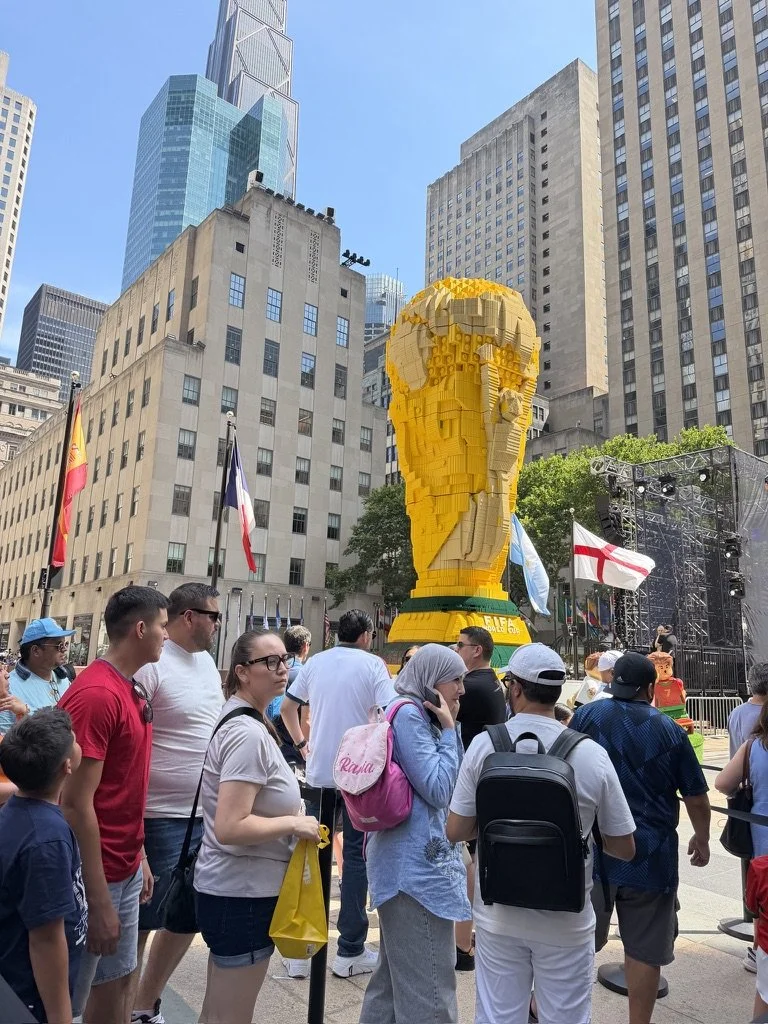
What a weekend at the 2026 World Cup final in New York taught me about belonging, brand trust, and reaching people who live across more than one culture.
I flew to New York for the World Cup final weekend, and I spent most of it studying the crowd rather than the match. That's a habit of mine. I've spent fifteen-plus years in marketing, a lot of it on global campaigns that had to work across continents at the same time, so a city with dozens of nations pouring into it is the closest thing to a fun market research. I wanted to see, up close, how brands actually behave when the whole world shows up at once.
For most of my career, "multicultural marketing" has arrived with a checklist attached. Translate the sign. Add the QR code. Cast for representation. Put the release form in two languages, and call it inclusive. That checklist made sense back when we believed people lived inside one cultural box. They don't. They never really did.
People move across identities all day
Watch anyone for a full day, and you will see it. We talk one way at work and another way at the dinner table. We carry the country on our passport and the one our grandmother cooks from. Plenty of people pick the Spanish-language broadcast of a match for the way the goal is called, even when they would follow the English one fine, because it feels more passionate and fun.
This is not a new idea. Anyone who has lived it could have told you a long time ago. Code-switching has been a fact of life in many communities for generations. What's new is that the research world is catching up. The Axis Agency put out a report this month, Code-Switching, arguing that consumers move fluidly across identities and that fixed cultural segments no longer describe how people actually behave. It is a good read. But I did not need a report to believe it. I watched it play out on the ground all weekend.
What belonging looked like on the ground
The brands that connected with people did something more interesting than translate. They built things anyone could walk up to and join. Bank of America had a booth where you made a custom fan bracelet. The LEGO Group let you build a team jersey brick by brick. These are the kind of activities that are fun for most to enjoy.
That is the part that stayed with me. Standing at those tables were a parent and a toddler, an adult there with their aging mother, two people on a date, a group of old friends. Different languages, different backgrounds, different reasons for showing up, some of them barely soccer fans at all. Everyone was a priority. They all got to make something and take a memory home.
That feeling, being folded in instead of treated as an afterthought, is the entire point. It is what earns trust that sticks. And in the categories I work in most, finance and healthcare, where trust is basically the product, it is the difference between a campaign people tolerate and one they remember you for.
The brands that read the room won
I walked nearly every activation across the weekend, and you could sort them into two piles fast. One pile showed up loud and spent big on a logo-heavy photo op. The other pile paid attention to the room and handed people something useful. A fan bracelet you would actually wear. Travel-size toiletries offered to a crowd that had, in fact, forgotten theirs. And… sanitizers!! A podcast sponsorship that put fans a few feet from a player they came to see (Vozinha!!)
Bank of America sponsored the Men in Blazers taping, which meant regular fans got to be in the room when a rising star made a rare appearance. The brand bought proximity to a moment people already loved, and let the moment do the work. Presence before message. That is the magic.
The human moment stood out in a sea of AI
I have to name one more thing, because it colored everything else I saw. All week, the New York subway was wall-to-wall AI ads. “One prompt, job done.” “Every frontier model included.” Ride after ride. I am not against any of it; I use some AI tools in my own practice. But when a city's ad inventory starts to sell the same promise, it stops registering.
Which is exactly why the human stuff hit so hard. The moment I keep coming back to is Vozinha, the forty-year-old goalkeeper for Cape Verde, a country of about half a million people and the third-smallest nation ever to reach a World Cup. He spent nineteen years in leagues most people have never heard of to get there. His following went from fifty thousand to fourteen million in a single day. And the crowd around him came together for a man from a country most of them had never visited, wearing whatever jersey they happened to own, because there was not an official Cape Verde one to buy. You cannot automate that.
What this means for your next campaign
If you are planning anything for a multicultural audience, here is what I would carry into the brief.
Map how people move between their identities, instead of assigning them to one segment and stopping there. The person you are trying to reach is holding several identities at once, and they switch between them depending on who they are with and what the moment asks for.
Design for participation. Representation gets you on the guest list. Participation is what makes someone feel like they belong at the party.
Choose presence over volume. The loudest brand rarely wins the room. The one that gives people a reason to stay usually does.
Treat trust as the compounding asset it is, especially in a regulated category. Every experience that makes someone feel included is a deposit. Every one that makes them feel like an afterthought is a withdrawal.
The best test I know is a simple one. Look at everyone you are trying to reach, and ask whether all of them would feel like they belong in the room you built. If the honest answer is no, that is where the work is.
FAQ
Q: What does "multicultural marketing beyond translation" mean?
A: It means reaching diverse audiences by understanding how they move across identities and building experiences where they feel they belong, rather than only translating a campaign into another language or casting for representation.
Q: What is code-switching in marketing?
A: Code-switching describes how people shift between cultural identities, languages, and communities depending on context. For marketers, it means one person can belong to several audiences at once, so campaigns should reflect that fluidity instead of assigning people to a single fixed segment.
Q: Why is belonging more important than representation?
A: Representation puts a group in the picture. Belonging gives them something to participate in and a reason to stay. At the 2026 World Cup, the brands that let anyone step in and take part built more trust than the ones that only showed up loud.
Q: How did brands market at the 2026 World Cup in New York?
A: The most effective activations were participatory and human: Bank of America's custom fan bracelets, LEGO team-jersey builds, and a Bank of America-sponsored Men in Blazers taping that put fans close to the players. The loud, high-spend activations were far more forgettable.
Key takeaways
Multicultural marketing has moved past translation. Audiences move fluidly across identities, and fixed cultural segments no longer describe how people behave.
Belonging beats representation. The brands that won at the 2026 World Cup built experiences anyone could step into, regardless of background or fandom.
Presence beats volume. Useful, human touches outperformed loud spend.
Trust compounds, especially in regulated categories like finance and healthcare, where trust is the product.
The test for any campaign: would everyone you are trying to reach feel like they belong in the room you built?
About the author
Karen Li, MBA, is the founder of Weflouri, a fractional social media practice for brands in regulated industries. Over fifteen-plus years, she has led corporate social and global multicultural campaign work for mature enterprises, and she advises founders through the Pasadena WBC and the SBDC. She writes about social strategy, brand trust, and marketing to audiences who live across more than one culture. More at weflouri.com.